This guide explains the options, how to pay and how to avoid the common friction points. Fares are not listed because they change; confirm before you travel.
City buses
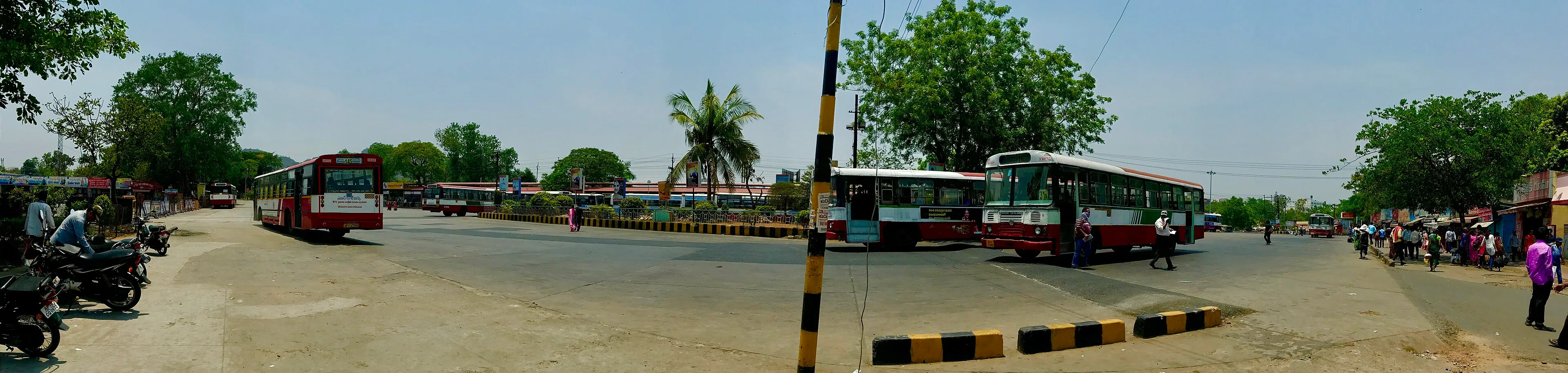
APSRTC operates city and suburban buses. They are the cheapest way to move around, but routes and stop names can be confusing for a first-time visitor. Ask at your hotel or at a bus terminal for the route to your destination, and keep the name of your stop in Telugu or on your phone.
Buses are busiest during office hours. If you are carrying luggage or travelling at night, a cab is usually more practical.
Auto-rickshaws
Auto-rickshaws are useful for short trips and are easy to find around markets, stations and hotels. Agree the fare before you get in, or insist on the meter where one is available. If the quoted fare seems unreasonable, walk to the next stand or use an app cab.
Keep small notes and coins. Drivers may not have change for a large note, especially early in the day.
App-based cabs
App-based cabs are widely used and are the simplest option for visitors who want a known estimate and a cashless payment option. Availability can vary by area and time. At the airport and station, use the designated pickup zone and confirm the driver’s details before getting in.
If you are staying somewhere with poor mapping, send the driver a pin or a landmark. “Near the temple” is not enough.
Airport and station transfers
| Route | Best option | Allow |
|---|---|---|
| Airport to central city | Pre-booked cab or app cab | More than the 29-minute free-flow estimate |
| Station to central hotel | Auto or app cab | Extra time at peak hours |
| PNBS to city | Auto or city bus | Time to find the correct stop |
| City to airport | Pre-booked cab | Buffer for traffic and check-in |
Detailed guides: airport to city and railway station.
Fares and payments
Fares change and app pricing is dynamic, so we do not publish a fare table. Bus fares are set by APSRTC; auto fares are negotiated or metered depending on the vehicle; app cabs show an estimate before booking.
UPI is widely accepted, but keep some cash for small vendors, buses and situations where connectivity fails. Ask for a receipt if you need one for expenses.
Safety and etiquette
- Wear a helmet if you ride a two-wheeler; do not rent one without checking insurance and condition.
- Avoid walking along major arterial roads after dark; use a cab.
- Share your route and vehicle details with someone if travelling alone at night.
- Keep bags on your lap or between your feet in autos.
- Do not accept unsolicited “guides” at stations or airports.
- In a dispute, stay calm and contact the operator or police rather than escalating.
Walking
Walking is pleasant in markets and neighbourhoods, but the city is not uniformly pedestrian-friendly. Pavements can be uneven or obstructed, and crossing major roads requires care. Use walking directions only for short, local trips; take a cab for anything on an arterial road.
Frequently asked questions
Is there a metro in Vijayawada?
No metro is in operation. Getting around relies on buses, auto-rickshaws, cabs and private vehicles.
Are app-based cabs available in Vijayawada?
Yes, app-based cabs are widely used, though availability varies by area and time. At the airport and station, use the designated pickup zone.
How much does an auto-rickshaw cost?
Fares change and depend on distance and negotiation. Agree the total before starting and keep small notes ready.
Can I use UPI in Vijayawada?
UPI is widely accepted, but carry some cash for small vendors, buses and connectivity failures.
Sources and further reading
- APSRTC — Andhra Pradesh State Road Transport Corporation Official state bus operator
- OpenStreetMap Locations and coordinates, retrieved 25 Nov 2026
- Airports Authority of India — Vijayawada Airport Official airport operator page